INDIVIDUALLY ASSEMBLED IN THE USA · JAPANESE & SWISS AUTOMATIC MOVEMENTS
ÉCHELLE / Inside the watch
Tiny mechanism. Very busy.
Three core automatic movements, an optional longer-reserve upgrade, and a GMT specialist. Explained without needing a watch dictionary beside you.
First, the basics
What is a movement?
It is the mechanism inside the case that keeps time and moves the hands. In a mechanical watch, a wound spring stores energy. Gears carry that energy through the watch, while a small oscillating balance sets the pace.
The movements here are automatic: a rotating weight inside the watch uses your wrist’s motion to help wind the spring. You can also wind them with the crown. No battery, no charging cable. Your watch has a slightly different morning routine.
Leave it unworn long enough and it will stop. That simply means its stored energy has run out; winding it and setting the time gets it going again.
Japanese movement family
NH35
For a build that starts with the design.
NH35 · Japanese automatic
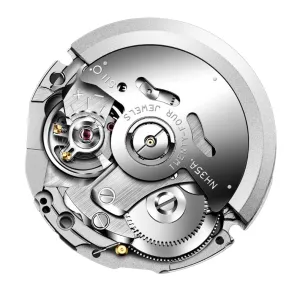
The NH35 is a familiar automatic movement from TMI’s Japanese movement family. It gives you hours, minutes, seconds and a date, with hand winding and a seconds hand that stops while you set the time.
Its seconds hand advances six small steps each second. That is the gentle mechanical sweep you see on the dial. Fully wound, the manufacturer specifies more than 41 hours of running time.
When it fits
Choose it when your attention is on the dial, case and strap, and you want a Japanese automatic at the center of that design. It is also a straightforward place to begin if this is your first mechanical watch.
Why it is here
The NH35 supports the Japanese automatic side of ÉCHELLE’s collection and gives custom builds room for different dial and strap combinations at the $325 starting price.
Swiss / Sellita
SW200-1
A Swiss rhythm, including the one inside North 38.
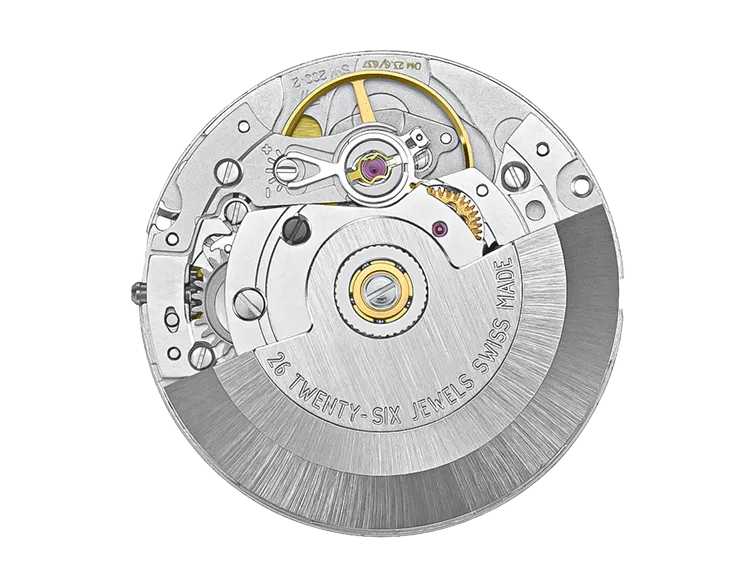
Made by Sellita in Switzerland, the SW200-1 is an automatic movement with hand winding and stop-seconds for setting the time. Its balance runs at 4 Hz, giving the seconds hand eight small steps each second.
That is a subtly different cadence from the NH35. Typical running time is around 41 hours when fully wound in current manufacturer specifications; the exact version is confirmed for your build.
Optional power reserve upgrade / +$95
Sellita SW200-2 Power+
Sellita SW200 family · reference image
65 hours typical reserve when fully wound8 steps / second the familiar 4 Hz cadence
Power reserve is the time a fully wound watch can run without more winding. The SW200-2 Power+ extends that to around 65 hours, compared with around 41 hours for the standard SW200-1. It keeps the same eight small seconds-hand steps each second.
If you switch watches every couple of days, that extra stored energy gives you more room between wears. Think of setting a fully wound watch aside on Friday evening and picking it up on Sunday: the longer reserve can help it keep running through the break. It still needs winding or wrist movement to replenish that energy.
This is an optional $95 upgrade on compatible Sellita builds, replacing the SW200-1. The standard movement remains a choice. North 38 is $600 with its standard movement, or $695 with Power+; a standard Sellita custom build starts at $795, or $890 with the upgrade, before other options.
Availability, case fit and dial compatibility are confirmed personally. This upgrade is for compatible Sellita builds; it does not replace the NH34 in ÉCHELLE GMT.
When it fits
Choose it when a Swiss movement is part of what you want from the watch, or when you are drawn to North 38, which uses the SW200-1. It suits someone who enjoys the mechanism as much as the dial.
Why it is here
Sellita gives ÉCHELLE a Swiss automatic option for both North 38 and compatible custom designs. North 38 has its own $600 model price; SW200-1 custom builds start at $795.
Swiss / ETA
2824-2
For someone who likes knowing exactly what is inside.
ETA 2824 family · Swiss automatic
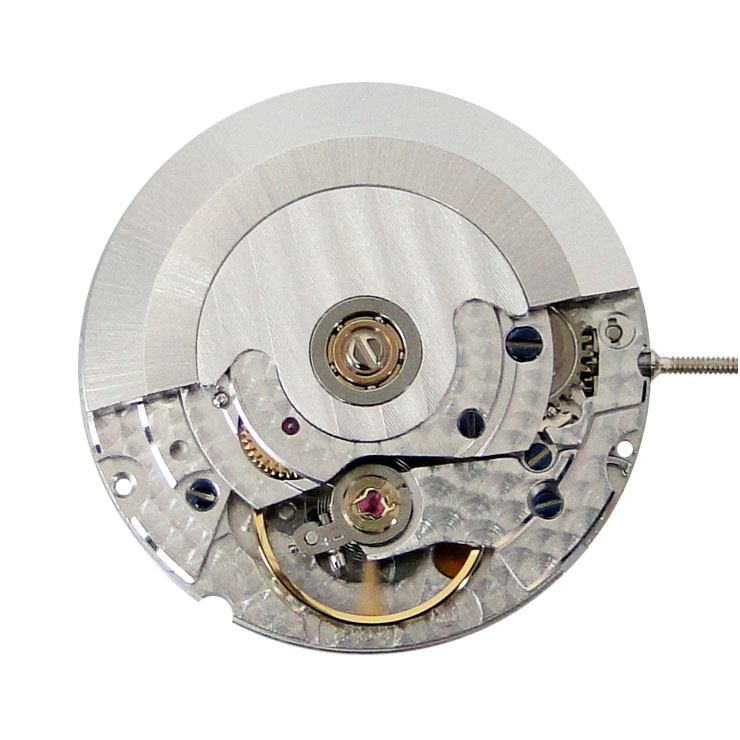
The ETA 2824-2 is another Swiss automatic, made by ETA. It also runs at 4 Hz, moves the seconds hand in eight steps per second and stops that hand for time setting. ETA lists a typical fully wound running time of 42 hours.
Its day-to-day operation feels familiar alongside the Sellita: wear it, wind it when needed and set the time with the crown. The distinction is the manufacturer and the particular movement specification used in your watch.
When it fits
Choose it when you specifically want an ETA movement or a collection design built around the 2824-2. If you have enjoyed an ETA-powered watch before, that familiarity can be part of the choice.
Why it is here
It keeps ETA available as a distinct Swiss option, with custom builds starting at $995. ÉCHELLE’s ETA collection models list their movement grade individually; the grade and dial compatibility are confirmed for a custom build.
A specialist / ÉCHELLE GMT
NH34 GMT
One watch. Two time zones.
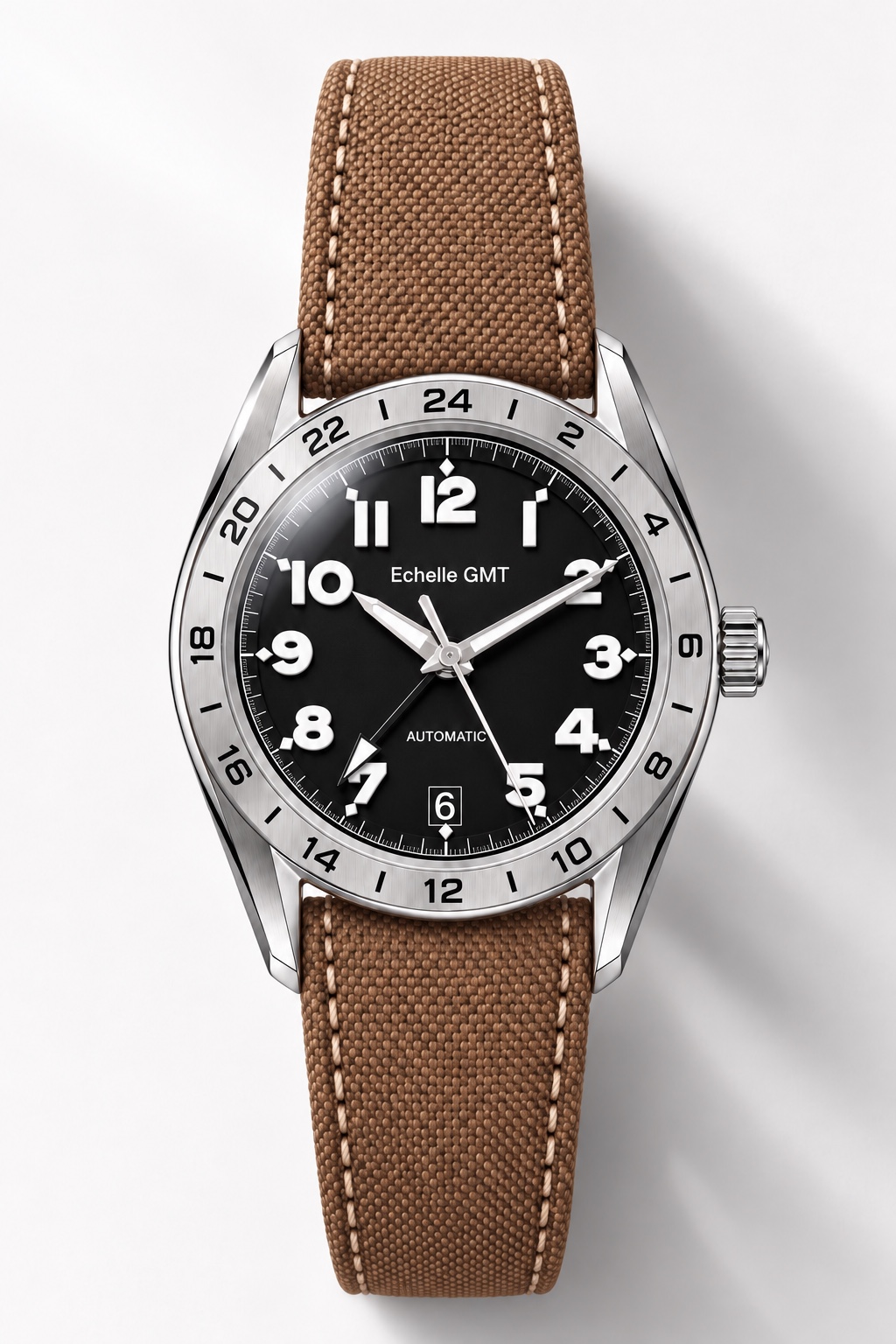
ÉCHELLE GMT · 38 mm or 40 mm
The NH34 is the automatic movement used specifically in ÉCHELLE GMT. Alongside the usual hour, minute and seconds hands, it adds a fourth hand that makes one complete turn every 24 hours.
Read that arrow-tipped hand against the 24-hour bezel to follow a second time zone. It can keep home time in sight while you are away, or tell you whether it is a sensible hour to call someone overseas. The crown adjusts the GMT hand independently; the main hands keep showing your local time.
When it fits
When a second time zone is part of your day. It is a useful extra function, rather than a different level of quality. The NH34 belongs to this dedicated GMT design; it is separate from the three movement choices in the customizer and the Sellita Power+ upgrade.
ÉCHELLE GMT · $550 38 mm or 40 mm · brown or green woven strap
A mechanical seconds hand makes lots of little jumps. Here are six and eight steps per second, shown at real speed.
NH356 steps / second · 3 Hz
Sellita & ETA8 steps / second · 4 Hz
Illustration of seconds-hand cadence, rather than a working watch. A higher beat rate changes the sweep; accuracy also depends on adjustment, movement grade, condition and how the watch is worn. Motion stays paused if your device requests reduced motion.
Choosing yours
Start with what interests you.
The three movements at a glance
Movement
Seconds-hand rhythm
Custom build starts at
A reason to choose it
NH35
6 steps per second
$325
A Japanese automatic build centered on your dial, case and strap.
Sellita SW200-1
8 steps per second
$795
You want a Swiss automatic or enjoy the movement used in North 38.
ETA 2824-2
8 steps per second
$995
You have a particular interest in ETA or an ETA-powered design.
These are starting prices for custom builds. Dial, strap and other selections can change the total. Ready-designed watches, including North 38, have their own prices. Some dials are unavailable for Swiss movements.
You can begin with a dial you love and work back to the compatible movement. Or begin with a movement you are curious about and build around it. Both are useful ways to choose.
A few words, translated
The watch dictionary, shortened.
Power reserve
How long a fully wound watch can keep running without more winding. It describes stored energy, rather than how long you can own or wear the watch. The optional SW200-2 Power+ upgrade gives compatible Sellita builds a typical 65-hour reserve. See the power-reserve upgrade.
Hacking / stop-seconds
The seconds hand stops when the crown is pulled to the time-setting position. It helps you line the watch up with a reference time. All three movements have this feature.
Jewels
Small bearing stones inside the mechanism, usually synthetic rubies, that reduce friction at moving parts. NH35 has 24, Sellita SW200-1 has 26 and ETA 2824-2 has 25. The count reflects the movement’s construction.
Movement grade
A manufacturer’s specification for a version of a movement, which can include its adjustment and finishing. Knowing the exact grade tells you more than just seeing “Swiss” on a page. Magnus confirms the specification for your build.
Does it need care?
Mechanical movements need maintenance over time. Follow the instructions supplied with your watch for winding, setting and date changes. Contact Magnus if the watch’s behavior changes or you have a question about service.
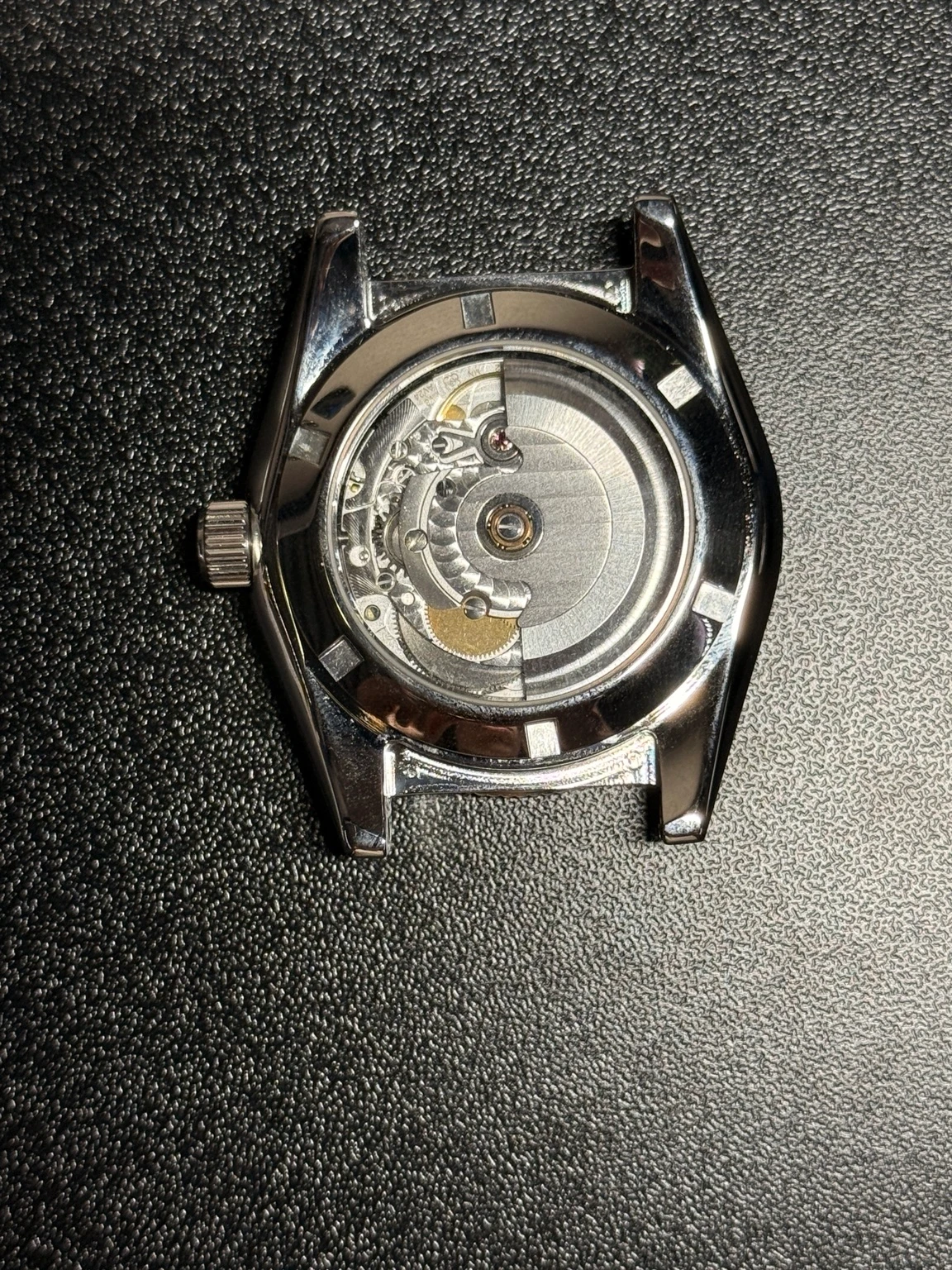
A view through the display back. Exact caliber and finishing depend on the build.
Why these three
Different ways to enjoy the same idea.
ÉCHELLE offers a Japanese automatic and two Swiss alternatives so that the design, your interest in the mechanism and your intended budget can all shape the watch. All three share the hands-on pleasures of mechanical timekeeping: winding a spring, watching the seconds move and wearing a small mechanism through the day.
If you are happy simply knowing how it works, that is enough. If you want to get curious about every little part, there is plenty in there to keep you occupied.
Manufacturer references
Specifications are based on manufacturer documentation. Exact movement version, grade and compatibility are confirmed for each build.